Water Heater Repair in Abington, PA
Region Home Services repairs gas, electric and tankless water heaters in Abington Township homes. We drive out from our office in Bensalem, about 20 to 30 minutes away depending on the neighborhood, and the phone is answered 24 hours a day. Every gas unit gets a combustion and venting check, and the price goes in writing before any work starts.
Get a Free Estimate
We'll call back to confirm the visit.
- Written price before any work
- Same-day priority for leaks and no hot water
- Combustion safety check on every gas unit
Or call us directly: 215-639-0424 – open 24 hours
- 5.0 Google, 270+ reviews
- Family-owned since 1974
- Our own technicians
- PA HIC #PA182723
- Answered 24/7
What We Fix on Abington Water Heaters
Roughly three out of four homeowners here heat with gas, so the heater we're called to is usually a gas tank.
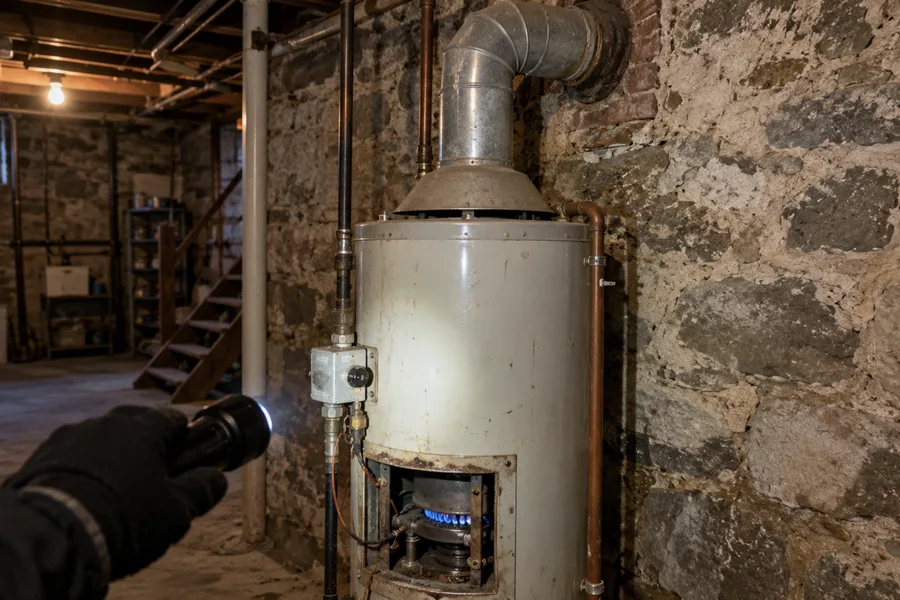
Gas Water Heater Won't Light or Stay Lit
We check the thermocouple, the thin probe that tells the gas valve the pilot is burning. Then we check the pilot and ignition assembly and the gas control valve. Every gas repair finishes with a venting and combustion safety check. Call when the pilot keeps going out.
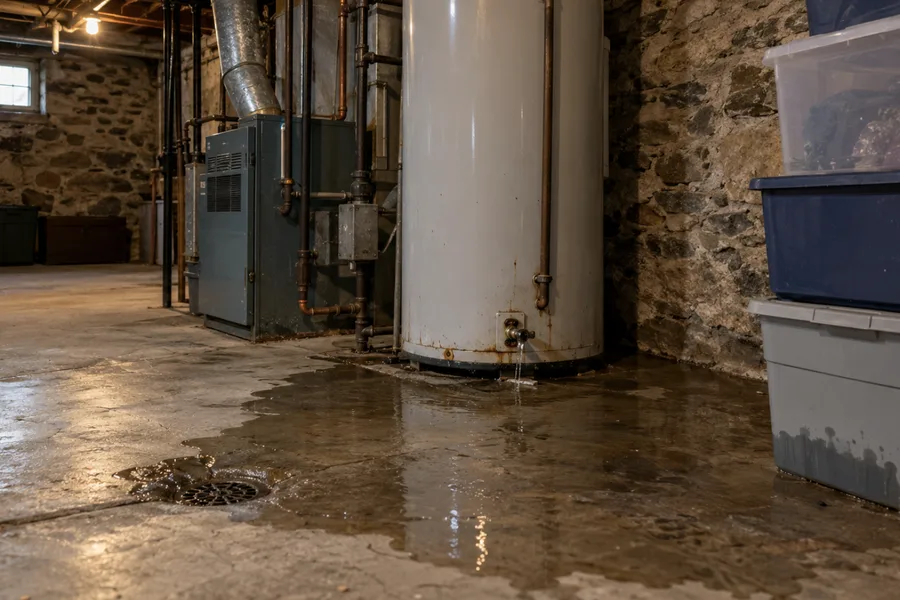
Leaks and a Dripping Relief Valve
We trace the water to the drain valve, a fitting on top, or the T&P relief valve. That's the safety valve that opens when temperature or pressure climbs too high. We schedule leak calls the same day whenever we can. A leaking tank shell can't be repaired.
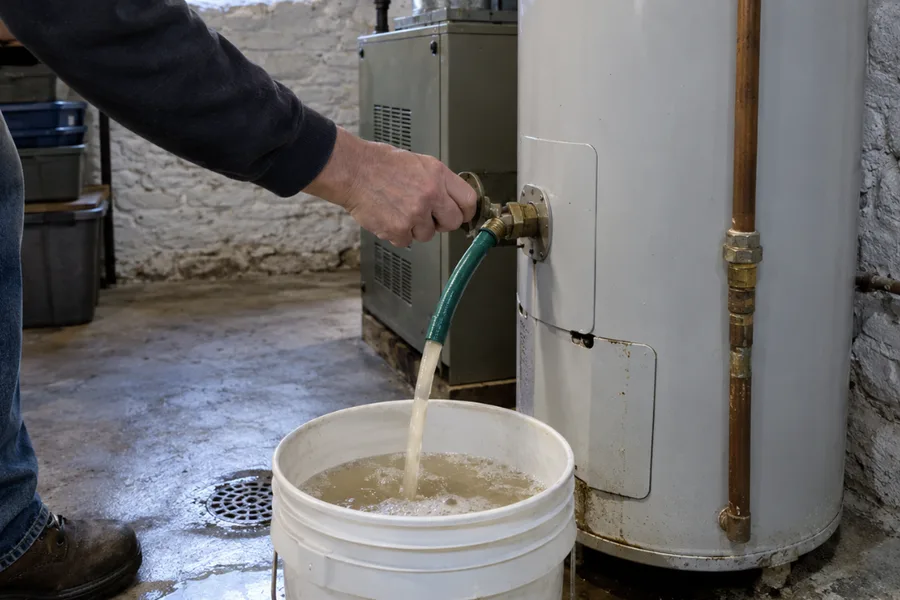
Rumbling, Popping and Short Hot Water
Sediment is mineral scale that settles on the tank bottom, and it makes a heater rumble and run out early. We flush the tank and check what the scale left behind. A yearly flush keeps the noise and the short showers from coming back.
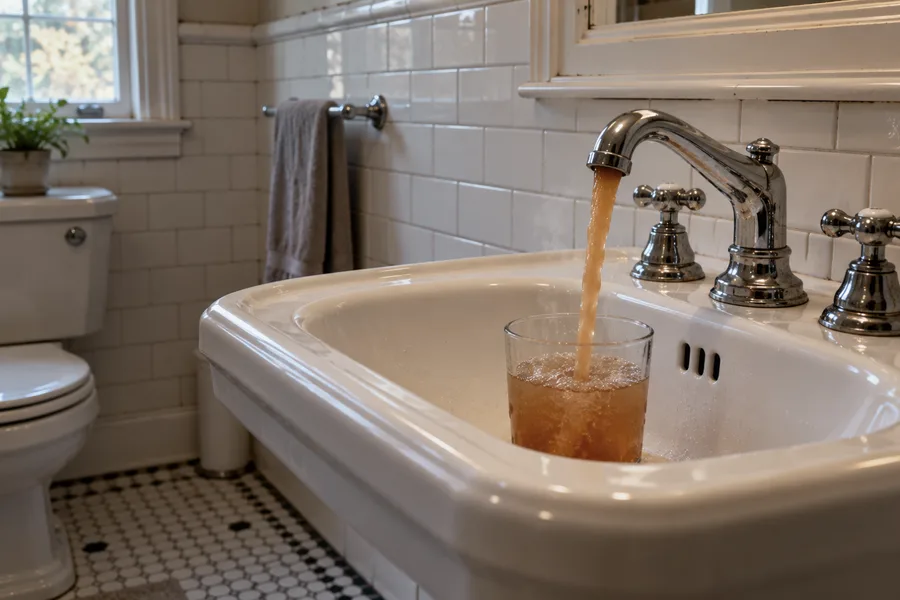
Rusty or Rotten-Egg Hot Water
Brown water or a sulfur smell from the hot tap usually points to a used-up anode rod. That's the metal rod that corrodes so the steel tank doesn't. We pull it, look at it, and replace it before rust gets to the tank.
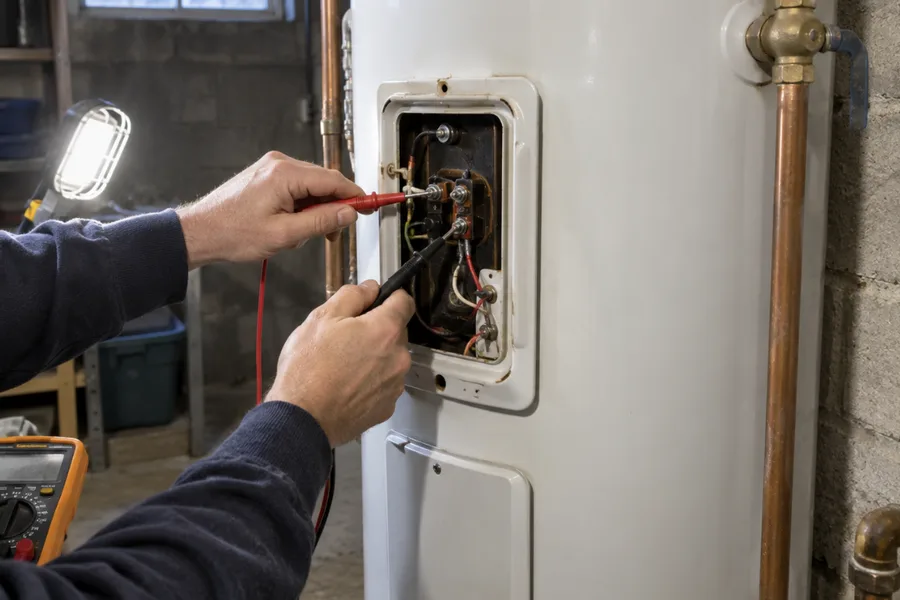
Electric Water Heater Not Heating
Most electric tanks have two heating elements, each switched by its own thermostat. We test both and replace the one that's burned out. If the high-limit switch tripped, we find out why before we reset it. Call when the water turns lukewarm or cold.
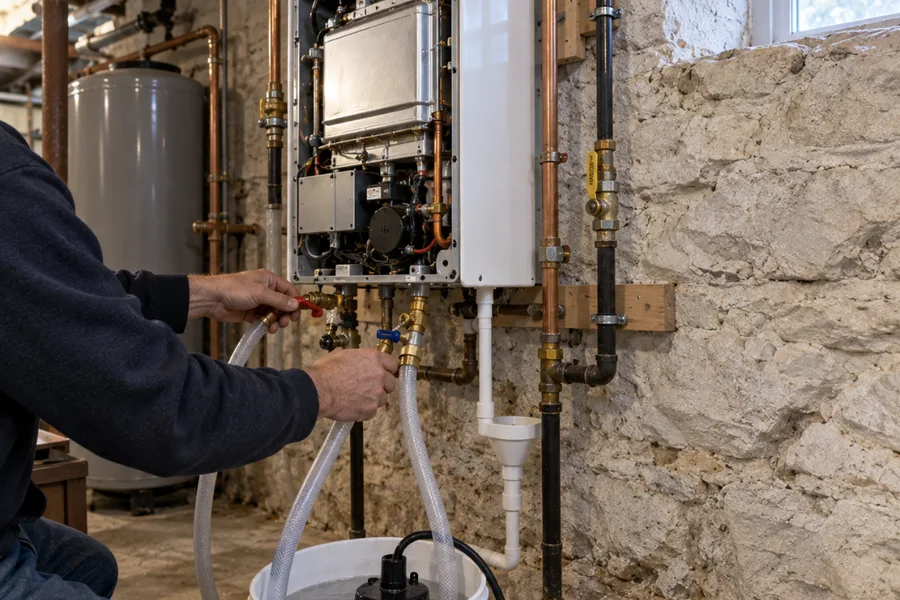
Tankless and High-Efficiency Units
We read the error code and descale the heat exchanger. Then we check the flow sensor, ignition, condensate drain and PVC vent, the parts that usually stop a tankless or condensing heater. All major brands, Rinnai included. Call with the code on the display.
Gas Tanks in Older Abington Basements
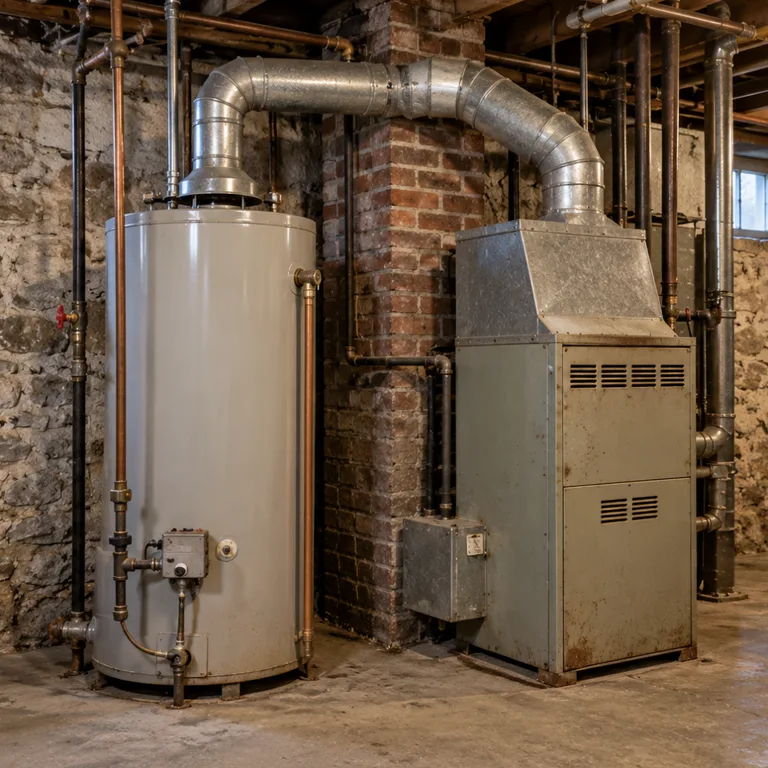
About three in four Abington homeowners heat with natural gas, and most homes here went up before 1960, many before the war. Put those two facts together and the typical call looks like this: a gas tank in the basement, often right beside the furnace and often venting into the same chimney.
That shared vent is why our visits here don't stop at the burner. On any gas tank we touch, we check the draft hood, the metal collar on top that draws exhaust into the vent. We also check the vent connector running to the chimney, and we confirm the exhaust actually goes up and out instead of spilling back into the basement. Gas tanks are what we see most, so thermocouples, pilot assemblies and gas valve parts are usually the first things we load for the trip.
Renovated homes with an electric tank or a tankless unit get the same diagnosis, part by part. One practical step: if your heater shares a chimney with an older furnace and nobody has looked at the venting in years, ask us to check it along with the repair.
From Your Call to Tested Hot Water
Here's what happens once you pick up the phone.
Tell us what the heater is doing. You'll get a text reminder the day before and the day of the visit, with a photo of the technician who's coming.
We inspect the components, look for leaks and sediment, and read tankless error codes until we've found the part that failed.
You see the scope and cost on paper and approve them before anyone picks up a wrench.
We aim to finish in one visit when the part is on the truck. Then we check the water temperature, look for leaks under pressure and run a combustion check on gas units.
Why Abington Homeowners Call Us
Here's what you can count on from the first call.
- Venting checked, every time. We look at combustion and the vent path on each gas heater we work on, not only when something seems off.
- Our own technicians. Everyone who comes to your door works for Region Home Services. We never send subcontractors.
- Close and reachable. We're a 20–30 minute drive away and answer around the clock. A leak or a cold tap gets same-day priority when the schedule allows.
- Repair first. We recommend a new heater only when our own stated rule says fixing the old one no longer makes sense.
- Family-owned since 1974. Rated 5.0 on Google by 270+ reviewers.
Get a Free Estimateor call 215-639-0424
Straight From Our Google Reviews
We hold a 5.0 rating on Google from more than 270 reviewers. Here are four, word for word. Read all 270+ Google reviews
“I called yesterday afternoon and a tech was out here first thing this afternoon. He was able to find the problem and fix it pretty quickly. He knew exactly what he was looking for and went straight to it!”
“CJ was great. He explained everything that he found during the inspection even included photos of what he found, he answered all my questions.”
“The guys show up when they said they be here and came in and went right to work. Both of them were very friendly and courteous. Cleaned up after they were done.”
“Excellent service from start to finish. … You can really tell this is a family-owned business that takes pride in what they do.”
What You Notice and What We Do
Match what you're seeing to the usual cause and our first move. Gas units come first, since most homes here burn gas.
| What you notice | Usual cause | What we do |
|---|---|---|
| No hot water from a gas heater | Pilot out from a worn thermocouple, or a failed gas control valve | Test the thermocouple and valve, replace the failed part, relight and check combustion |
| Gas pilot won't stay lit, or an exhaust smell near the heater | Poor draft, with exhaust not clearing the vent | Shut it off at the gas dial and call; we check the draft hood, vent connector and chimney draft |
| Water around the base of the heater | Drain valve, a top fitting, the T&P valve's discharge, or the tank itself | Find the source and replace the valve or fitting, or tell you straight if the tank is leaking |
| Rusty or smelly hot water | Used-up anode rod | Pull and replace the anode rod |
| Rumbling or popping from the tank | Sediment on the tank bottom | Flush the tank |
| No hot water from an electric heater | Burned-out element, failed thermostat or tripped high-limit switch | Test elements and thermostats, replace the failed part, find the cause before resetting |
| Error code on a tankless display | Scale, a flow sensor or an ignition fault | Read the code, then descale or replace the sensor or igniter |
Two parts on a gas tank are safety devices: the T&P valve and the draft hood. Never cap, plug or tape either one, even if the valve drips. A dripping valve means something upstream is wrong, so turn the unit off and call us.
What a Water Heater Repair Usually Costs
Most water heater repairs come in between about $230 and $1,000, and a typical one lands around $600. Where yours falls depends on four things. Gas or electric matters, because a gas control valve costs more than an electric element. A tankless unit takes different parts and more testing than a tank. The failed part sets most of the bill. Reach counts too: a heater tucked behind the furnace in an older basement takes longer to get at and drain than one standing in the open.
Here's what the repairs we make most often usually run:
| Repair | Usually runs | What moves the price |
|---|---|---|
| Thermocouple or pilot assembly on a gas heater | $150–$300 | Whether the whole pilot assembly or only the thermocouple needs replacing |
| Gas control valve on a gas heater | $350–$750 | The valve model and whether the tank has to be drained |
| T&P relief valve | $150–$350 | How easy the valve and its discharge pipe are to reach |
| Anode rod | $150–$400 | Rod type and the clearance overhead to pull it out |
| Heating element on an electric heater | $200–$400 | One element or two, and whether a thermostat goes too |
| Tankless descaling | $175–$350 | How much scale has built up and whether the flow sensor needs attention |
Those are typical ranges, not quotes. Once the technician has found the failed part, you get the exact price in writing, and nothing starts until you sign off on it.
When We'll Recommend a New Tank Instead
We'd rather fix your heater, and most of the time we can. Three situations change our answer. If water is coming through the tank wall, there's nothing to patch. If the repair would cost about half of what a new, installed heater does, we put both numbers on paper and let you choose. And if a unit past roughly eight years has its second major failure within a year, we'll recommend replacing it.
For context, tank heaters usually last 8–12 years and tankless units 15–20. When a replacement does win, removing and disposing of the old heater is part of the job. During the estimate we also confirm what Abington Township requires for permits. Financing is available for bigger repairs and replacements.
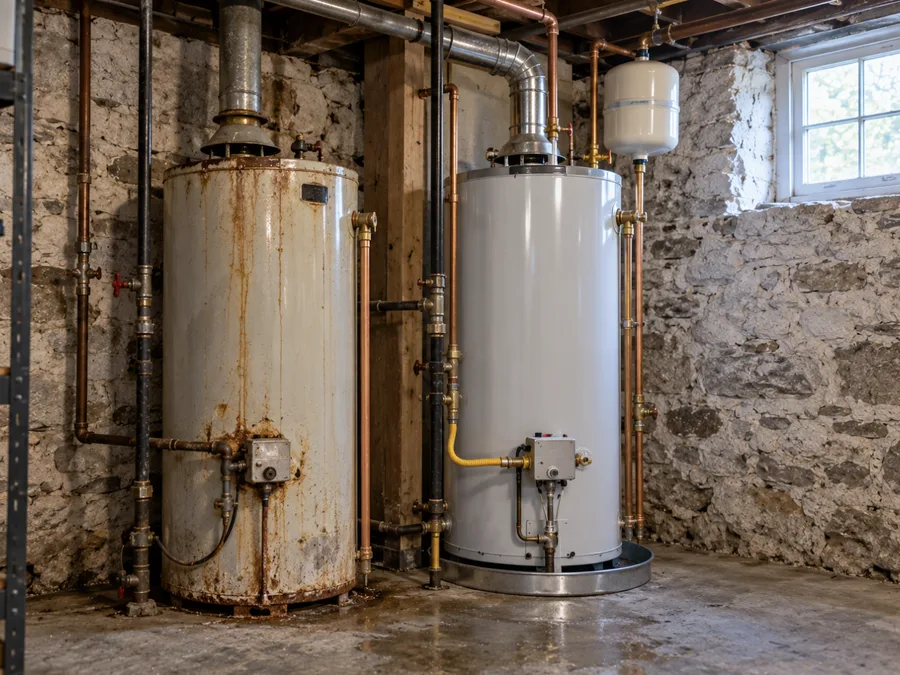
Water on the Floor or a Gas Smell?
Call 215-639-0424. Someone picks up day and night, and leaks get same-day priority if we can fit them in. January is when a water heater works hardest, so that's when small problems tend to surface.
Leak. Close the cold-water valve on the pipe at the top of the heater. Cut power at the breaker for an electric unit, or turn the gas control dial to OFF. Keep things off the wet floor, don't drain the hot tank yourself, and call us.
Gas smell or CO alarm. Get everyone outside first. Don't flip switches or use a phone inside. Call PECO or 911 from outside and don't relight the pilot. Leave the heater off until it's inspected, then call us.
Exhaust smell or soot at the draft hood. Set the gas dial to OFF, open a window and call. Exhaust that isn't going up the vent needs a look before the heater runs again.
Call Now – 215-639-0424Neighborhoods We Reach Across the Township
From Bensalem, most of Abington Township is a 20- to 30-minute drive. We cover Roslyn, Rydal, Meadowbrook, Ardsley and Crestmont. The Abington and Huntingdon Valley sections are on our route too, and so are Glenside and Willow Grove addresses that fall inside the township's lines. We also work in nearby parts of Montgomery County.
Questions We Hear About Water Heaters
Straight answers on leaks, costs and service.
Is a leaking water heater an emergency?
It's urgent when water is coming out of the tank's body or the relief valve is spitting hot water. A slow drip from a fitting is less urgent. For any steady leak, close the cold-water valve on top, switch the unit off at the breaker or gas dial, and call 215-639-0424. Leak calls get scheduled the same day when possible.
Where does a water heater usually leak from?
Most leaks start at the drain valve near the bottom, at the T&P relief valve or its discharge pipe, or at the water connections on top. Those parts can be replaced. Water seeping from the steel shell is different. It means the tank has corroded through, it can't be patched, and we'll price a replacement in writing instead.
How much does it cost to fix a leaking water heater?
When the T&P relief valve is the culprit, the repair usually runs about $150 to $350. A leaking fitting or drain valve depends on access and parts, so we price it once we've seen it. A leak in the tank itself isn't a repair job, because it means replacement. Either way, the exact figure is written down and approved by you before we start.
Who do I call when my gas water heater stops working?
Call us. Region Home Services works on gas burners, venting and controls as everyday work alongside furnaces. Our own technicians check the thermocouple, pilot and gas control valve and find what failed. Then they close out the job by testing combustion and the vent. If you smell gas, leave the house and call PECO or 911 from outside first. Otherwise, call 215-639-0424.
How often should a tankless water heater be serviced?
Once a year. Mineral scale builds up inside the heat exchanger, and a yearly descaling clears it so the unit keeps its output. If scale has already caused trouble, we can also look at the flow sensor and ignition, and the condensate drain and PVC venting on condensing models. We descale Rinnai units by Rinnai's own procedure and service the other major brands too.
A Checked Gas Unit and a Written Price
Call 215-639-0424 or send the form, day or night. Tell us whether the heater is gas or electric and what it's doing. We'll bring the right parts and write down the cost before we touch anything.
215-639-0424Get a Free Estimate